If you’ve spent any time exploring Amazonian botanicals, you’ve probably noticed a pattern: an enormous amount of the rainforest’s traditional medicine comes not from leaves, roots, or flowers, but from bark. Cat’s claw, the inner bark of a climbing vine, is likely the most internationally recognized example. But it’s far from the only one, and readers who’ve gone deep on one Peruvian bark remedy are often surprised to learn how many others exist, each with its own distinct traditional use, chemistry, and reputation among Amazonian herbalists.
Chuchuhuasi is one of the more storied entries in that category — a thick, deeply furrowed tree bark that has been part of Peruvian Amazon herbal tradition for generations, prized specifically for joint and muscle comfort. It’s less globally recognized than cat’s claw, but among people who study Peruvian bark remedies seriously, it comes up constantly. This guide covers what chuchuhuasi actually is, how it’s traditionally used, what the chemistry and available research suggest, and where it fits alongside the broader family of Amazonian bark botanicals.
Consider this article part of an ongoing look at Peruvian bark remedies as a category, rather than a one-off profile of a single plant. Once you start researching Amazonian herbal tradition seriously, a clear pattern emerges: an outsized share of the region’s most trusted remedies come specifically from bark — not leaves, not roots, not flowers — and understanding why that pattern exists is genuinely useful context for evaluating any individual botanical, chuchuhuasi included.
What Is Chuchuhuasi?
Chuchuhuasi (pronounced roughly “choo-choo-WAH-see”) comes from Maytenus macrocarpa, sometimes also referenced under the closely related Maytenus krukovii, a tree in the Celastraceae family native to the Peruvian, Ecuadorian, and Colombian Amazon basin. The name itself is derived from Quechua, generally translated as something close to “trembling back” — a nod, according to traditional lore, to the bark’s long-standing reputation for easing the kind of deep muscular and joint discomfort that makes a person’s back feel unsteady or shaky.
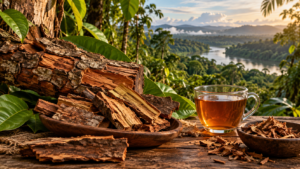
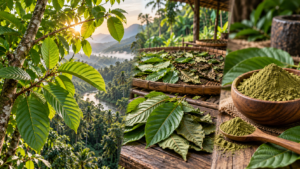
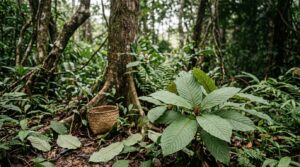
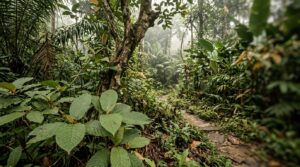
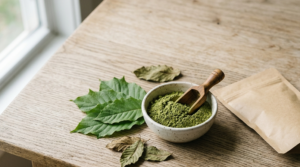
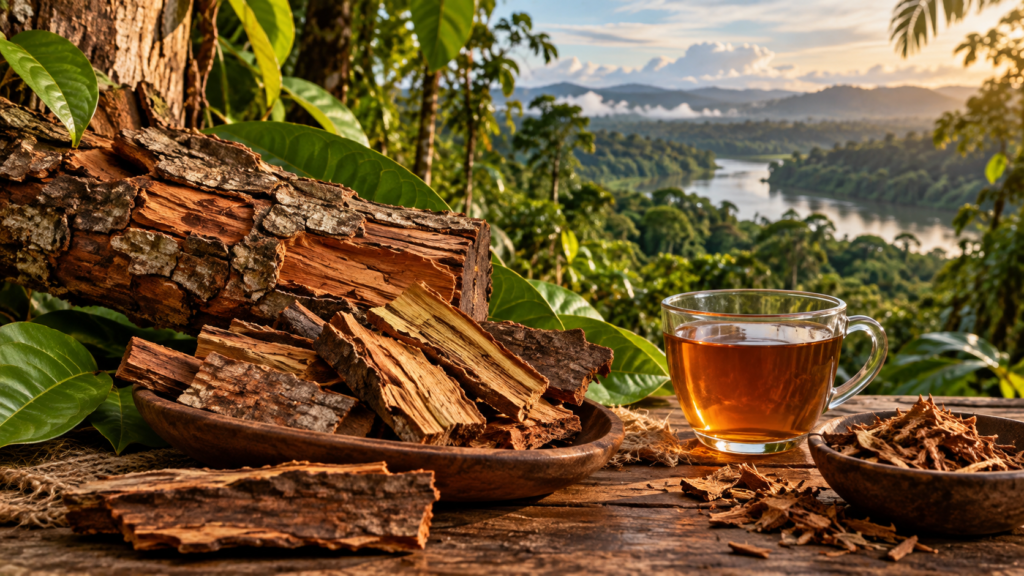
Unlike cat’s claw, which is harvested from a climbing vine, chuchuhuasi comes from a substantial forest tree that can grow quite large and live for many decades. The bark itself is thick, deeply grooved, and reddish-brown — visually distinct from the smoother bark of many neighboring rainforest species. Traditional harvesters strip sections of this outer bark, which is then either dried and prepared as a decoction or, far more commonly, macerated in cane alcohol to create a tincture.
Traditional Ethnobotanical Use
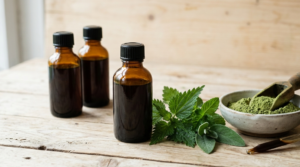
Chuchuhuasi’s traditional reputation centers overwhelmingly on joint and muscle discomfort, along with a broader use as a general tonic. Indigenous and mestizo communities throughout the Peruvian Amazon have historically prepared chuchuhuasi bark by soaking large pieces in aguardiente (a raw, high-proof cane alcohol) for weeks or even months, producing a dark, bitter tincture that is taken in small daily doses. This preparation method is so closely associated with the plant that in many Amazonian markets, “chuchuhuasi” effectively refers to the pre-made tincture as much as it does the raw bark itself.
Beyond joint and muscle support, traditional use extends to general fatigue, as a warming tonic in colder or damp conditions, and — in some regional traditions — as a support for reproductive health and vitality, though this latter use is considerably less standardized and less studied than its joint-focused application. Traditional healers, or curanderos, in the Peruvian Amazon have also historically combined chuchuhuasi with other regional botanicals in compound tonics, reflecting a broader Amazonian herbal tradition of blending multiple barks and roots rather than relying on single-ingredient remedies.
The Chemistry Behind Chuchuhuasi Benefits
Compared to cat’s claw, chuchuhuasi has received considerably less formal pharmacological research — a gap that’s worth stating plainly rather than glossing over, since it directly affects how confidently any health claim can be made.
What research does exist has focused on a class of compounds called quinone-methide triterpenes, including maytenfolone-A and related compounds isolated from Maytenus species. These triterpenes have drawn laboratory interest for anti-inflammatory and antioxidant activity in cell-based studies, which lines up reasonably well with the bark’s traditional use for joint and muscle discomfort. Maytenus species more broadly, including relatives used in other traditional medicine systems, have also been studied for related bioactive triterpene and phenolic compounds.
It’s important to be direct about the limits here: most of the available research on chuchuhuasi’s specific compounds comes from preliminary, small-scale laboratory studies rather than the more extensive human clinical trial base that exists for better-studied Amazonian botanicals like cat’s claw. Anyone researching chuchuhuasi benefits should treat the traditional-use evidence and the laboratory chemistry as suggestive and worth further investigation, not as settled clinical proof.
This evidence gap is actually fairly typical for the wider field of Peruvian bark remedies. A relatively small number of Amazonian botanicals — cat’s claw among them — have attracted the sustained international research funding needed to move from “traditionally used” to “studied in controlled human trials.” Most of the rest, chuchuhuasi included, remain in an earlier research stage: enough laboratory and traditional-use evidence to justify genuine scientific curiosity, but not yet enough to support the kind of specific, quantified health claims that a well-funded clinical trial program eventually produces. That’s not a knock against the plant’s traditional reputation — it’s simply an honest description of where the research currently stands, and it’s a distinction worth applying to how you evaluate any lesser-known Amazonian botanical, not just this one.
Reported Chuchuhuasi Benefits
Based on the combination of centuries of traditional use and the available preliminary research, here’s an honest summary of what chuchuhuasi is traditionally used for and reported to support:
- Joint comfort. The plant’s primary and most consistent traditional application, aligned with its triterpene compounds’ studied anti-inflammatory activity.
- Muscle recovery and soreness. Traditionally used by those engaged in physically demanding rainforest work, taken as a tonic to ease general muscular fatigue and discomfort.
- General tonic and vitality support. Used broadly across Amazonian herbal tradition as a warming, fortifying tonic, particularly during colder or damp periods.
- Antioxidant support. Consistent with the antioxidant activity observed in triterpene compounds isolated from the bark in laboratory research.
As with any traditional botanical without an extensive modern human clinical trial base, these should be understood as traditional and preliminary research-supported uses, not medically established treatments for any diagnosed condition.
Chuchuhuasi vs. Cat’s Claw: Two Bark Traditions, One Shared Focus
It’s worth drawing a direct comparison here, since both barks are traditionally associated with joint and muscle-related support, despite coming from entirely different plants.
Cat’s claw (Uncaria tomentosa) is harvested from a climbing vine’s inner bark and is associated with a well-documented class of compounds — pentacyclic oxindole alkaloids — studied for immune modulation and NF-kB-related anti-inflammatory activity, backed by a comparatively larger body of clinical research, including small human trials in joint discomfort. Chuchuhuasi, by contrast, comes from a standalone tree’s outer bark and relies primarily on quinone-methide triterpene chemistry, with a research base still largely confined to preliminary and traditional-use evidence.
In practical terms: cat’s claw is the more clinically studied, more mainstream option in the US supplement market, while chuchuhuasi remains a comparatively niche, traditionally-driven botanical that hasn’t yet made the same transition into widely available, standardized supplement form. Both, however, emerge from the same broader Peruvian Amazon tradition of using tree and vine bark specifically for joint and muscular support — a pattern that’s too consistent across unrelated plant families to be coincidental, and one that reflects generations of accumulated Indigenous botanical knowledge about which barks genuinely help.
Where TomoX Fits Into the Bigger Bark Picture
Exploring a plant like chuchuhuasi is a useful reminder that the Amazon’s bark-based medicine tradition is much bigger than any single ingredient — and that context is exactly why TomoX is built around genuine expertise in this entire plant family, not just a single trendy compound.
To be clear upfront: TomoX does not contain chuchuhuasi. TomoX is formulated specifically around Cat’s Claw (Uncaria tomentosa) extract — 300mg of it in every tablet — chosen deliberately because it’s the Amazonian bark botanical with the strongest combination of traditional use history and modern research support for joint and immune health. This chuchuhuasi guide exists to give readers a fuller, more accurate picture of the broader Peruvian bark tradition TomoX comes from, not to suggest the two are combined in one product.
What TomoX does bring to that cat’s claw foundation is the same rigor a chuchuhuasi researcher would want to see applied more broadly across this whole category: standardized 300mg dosing per tablet, three genuinely enjoyable flavors (Strawberry, Watermelon, and Blue Raspberry) that solve the harsh, bitter taste traditionally associated with bark tinctures like chuchuhuasi’s own aguardiente preparation, full third-party lab testing, and compliance across all 50 US states.
If this deep dive into one lesser-known Amazonian bark has you curious about the rest of the plant family, check out other natural herbs covered on the TomoX blog — from cat’s claw itself to the wider cast of Amazonian botanicals worth understanding before you buy any of them.
US Market Availability
Chuchuhuasi’s US market presence looks noticeably different from cat’s claw’s, and that difference is itself informative for anyone comparison-shopping. Rather than appearing on the shelves of mainstream supplement brands like NOW Foods or Nature’s Way, chuchuhuasi is available in the US primarily through specialty importers focused specifically on Amazonian and South American botanicals.
Raintree Nutrition, a long-established US company specializing specifically in rainforest plant research, education, and sourcing, has documented chuchuhuasi extensively as part of its broader catalog of Amazonian ethnobotanicals, and is one of the more reliable starting points for readers wanting to research the bark’s traditional use and sourcing in more depth. Beyond specialty importers like this, chuchuhuasi tincture and cut bark are more commonly found through South American herbal specialty retailers and online marketplaces than through the mainstream vitamin-aisle brands most US shoppers are used to — a reflection of just how niche this particular bark remains outside dedicated Amazonian herbalism circles.
This is a genuinely useful data point for anyone comparison-shopping across Peruvian bark remedies: market availability itself is a rough, if imperfect, signal of how much a given botanical has been standardized, tested, and scaled for a mainstream audience. Cat’s claw’s presence on shelves at NOW Foods, Nature’s Way, and Solaray reflects decades of supply chain development and research investment. Chuchuhuasi’s continued reliance on small specialty importers reflects a plant that, while genuinely valued within Amazonian herbal tradition, hasn’t yet gone through that same scaling process — which is worth factoring in if consistent sourcing and standardized dosing matter to you.
Safety and Sustainability Considerations
As with any wild-harvested Amazonian bark, chuchuhuasi faces real sustainability pressure. Because traditional harvesting strips outer bark directly from mature standalone trees — rather than from a fast-regenerating vine like cat’s claw — over-harvesting poses a more direct threat to individual trees’ long-term survival if not managed carefully. Responsible sourcing means harvesting only sustainable quantities of bark per tree and allowing adequate regeneration time, the same conservation principle that applies across the broader Amazonian bark trade.
On the safety side, chuchuhuasi’s traditional preparation as a high-proof alcohol tincture is itself worth noting: much of what’s sold as “chuchuhuasi” in South American markets is, functionally, an alcoholic tincture, which carries its own separate considerations distinct from the bark’s chemistry. Anyone considering chuchuhuasi, whether in tincture or other form, should discuss it with a healthcare provider first, particularly given the comparatively limited modern research on interactions, appropriate dosing, and safety in specific populations such as pregnant or breastfeeding individuals.
It’s also worth noting that, because chuchuhuasi hasn’t been studied nearly as extensively as cat’s claw, there isn’t yet a well-established body of research on potential drug interactions the way there is for better-studied botanicals. That absence of documented interaction research isn’t the same as a guarantee of safety — it more accurately reflects how little formal pharmacological attention this particular bark has received so far, which is exactly why a conversation with a doctor or pharmacist matters more, not less, for a less-studied botanical like this one.
Frequently Asked Questions About Chuchuhuasi
- Is chuchuhuasi the same as cat’s claw?
No. They’re entirely different plants — chuchuhuasi comes from Maytenus macrocarpa, a standalone tree, while cat’s claw comes from Uncaria tomentosa, a climbing vine. They share a traditional focus on joint and muscle support and a home region in the Peruvian Amazon, but their chemistry and botanical families are unrelated.
- Can you drink chuchuhuasi tea, or is it only a tincture?
Traditional preparation is overwhelmingly alcohol-based — bark macerated in cane alcohol for an extended period. Dried bark decoctions (a tea-like preparation) do exist in some regional traditions, but they’re considerably less common than the tincture form, and the tincture is what most people encounter when researching or purchasing chuchuhuasi.
- Is chuchuhuasi legal and available in the US?
Yes, chuchuhuasi is legal to purchase and import as a botanical product in the US, though its availability is far more limited than mainstream herbs, generally requiring a specialty Amazonian botanical importer rather than a typical drugstore or big-box retailer.
- How does chuchuhuasi compare to turmeric or other common anti-inflammatory herbs?
Unlike turmeric’s curcumin, which has an extensive modern human clinical trial base, chuchuhuasi’s supporting evidence is considerably thinner — mostly traditional use plus preliminary laboratory research on its triterpene compounds. That doesn’t mean it isn’t worth understanding, but it does mean expectations should be calibrated to the more limited evidence base.
- Should chuchuhuasi replace a doctor-recommended joint treatment?
No. Like any traditional botanical discussed in this guide, chuchuhuasi should be treated as a complementary interest at most, not a substitute for medically diagnosed treatment of joint or muscle conditions.
The Bottom Line
Chuchuhuasi is a genuinely fascinating example of how deep the Peruvian Amazon’s bark-based healing tradition actually runs — a plant with centuries of dedicated traditional use for joint and muscle comfort, real (if still preliminary) chemistry to support that reputation, and a niche market presence that stands in useful contrast to better-known botanicals like cat’s claw. Understanding it doesn’t just satisfy curiosity about “another Amazonian herb” — it reveals a consistent, cross-species pattern in Indigenous Amazonian medicine: when it comes to joint and muscle support, bark, again and again, is where this tradition has concentrated its most trusted remedies.
This article is for educational purposes only and is not medical advice. Speak with a qualified healthcare professional before starting any new botanical supplement or tincture, particularly if you are pregnant, nursing, managing a chronic health condition, or taking prescription medication.