
Kratom (Mitragyna speciosa) has become one of the more polarizing substances in the US wellness and pain-management conversation. It’s sold openly in gas stations, smoke shops, and online retailers across most states, often marketed as a natural energy booster, mood support, or pain-relief alternative. For some people, occasional use never becomes a problem. For others, what starts as an occasional cup of tea or a few capsules gradually turns into a pattern they can’t easily stop — one that looks, both chemically and behaviorally, a great deal like opioid dependence.
That’s not an exaggeration. Kratom’s primary active compound, mitragynine, and its more potent metabolite, 7-hydroxymitragynine (7-OH), both interact with the same mu-opioid receptors targeted by prescription painkillers and illicit opioids. That shared mechanism is exactly why kratom can produce real physical dependence, why withdrawal from it can be genuinely uncomfortable, and why recognizing the signs of kratom addiction early matters. This article walks through what that dependence actually looks like, why concentrated 7-OH products have raised particular alarm among researchers and regulators, and — most importantly — the legitimate, doctor-guided paths available for getting help.
Understanding Why Kratom Is Habit-Forming
At low doses, kratom tends to produce mild stimulant-like effects — increased alertness, sociability, and energy. At higher doses, its effects shift toward the sedating, pain-relieving, and euphoric territory associated with opioids. This dual profile is part of why kratom has attracted such a wide range of users, from people managing chronic pain to those simply looking for an energy lift.
The problem is that regular use, especially at higher or more frequent doses, trains the brain’s opioid receptor system to expect the substance. Over time, the body adjusts its own chemistry around kratom’s presence — a process called neuroadaptation — and when the substance isn’t there, withdrawal symptoms emerge. This is the same basic mechanism that drives dependence on prescription opioids, and it’s why addiction medicine specialists increasingly treat kratom use disorder using frameworks originally developed for opioid use disorder.
It’s worth acknowledging why so many people start using kratom in the first place, because the path into dependence rarely starts with an intent to misuse anything. Common starting points include chronic pain that hasn’t responded well to other treatment, attempts to self-manage anxiety or low mood, and — increasingly — attempts to ease withdrawal from other substances, including prescription opioids. That last pathway is particularly worth naming: some people turn to kratom specifically because they’re trying to get off something else, only to find themselves dependent on kratom instead. None of this is a moral failing. It’s a predictable outcome of a substance that acts on the brain’s opioid system being sold with far less oversight, screening, or guidance than an actual prescription opioid would come with.
The Drug Enforcement Administration currently classifies kratom as a “drug of concern” rather than a scheduled controlled substance, and the FDA has not approved it for any medical use. That regulatory gray zone is part of why kratom is so widely accessible — and part of why so many users have little guidance on dosing, frequency, or the real risk differences between product types before dependence sets in.
Signs of Kratom Addiction to Watch For
Recognizing the signs of kratom addiction early — in yourself or someone you care about — makes it significantly easier to intervene before the pattern deepens. These signs tend to fall into three overlapping categories.
Physical Signs
- Needing progressively larger or more frequent doses to get the same effect (tolerance)
- Withdrawal symptoms between doses — including muscle aches, sweating, runny nose, nausea, irritability, and insomnia
- Noticeable changes in sleep patterns, appetite, or energy levels
- Gastrointestinal issues, including constipation or stomach discomfort, consistent with opioid-receptor activity
- Physical dependence that persists even when the person wants to stop
Behavioral Signs
- Using kratom throughout the day just to feel “normal,” rather than for any specific effect
- Spending significant time, money, or mental energy sourcing, using, or recovering from kratom
- Continuing to use despite clear negative consequences at work, school, or in relationships
- Repeated, unsuccessful attempts to cut back or quit
- Hiding or minimizing the amount or frequency of use from friends, family, or a doctor
Psychological Signs
- Strong cravings or preoccupation with kratom use
- Using kratom to cope with stress, anxiety, or emotional discomfort rather than as an occasional choice
- Irritability, anxiety, or low mood that improves only after using again
- A growing sense that daily functioning depends on having kratom available
No single item on this list is, by itself, proof of addiction. But a cluster of these signs — particularly tolerance, withdrawal, and continued use despite negative consequences — are the same clinical markers used to diagnose substance use disorders more broadly, and they’re a legitimate reason to talk with a healthcare provider.
If You’re Worried About Someone Else
Recognizing these signs in a family member, partner, or friend brings its own challenges, since kratom’s legal, over-the-counter status means it often doesn’t set off the same alarm bells that illicit drug use might. If you’re noticing a pattern — frequent trips to a smoke shop or gas station, unexplained irritability between uses, or a growing defensiveness about their kratom use specifically — it’s worth raising the topic directly, calmly, and without ultimatums. Framing the conversation around specific observed changes, rather than accusations, tends to be far more effective at opening the door to getting professional help than confrontation. A primary care doctor, a licensed therapist, or an addiction medicine specialist can also guide family members on how to approach this conversation constructively.
Why Concentrated 7-OH Products Raise the Stakes
Not all kratom products carry the same risk profile, and this is one of the most important distinctions for anyone trying to understand their own use — or a loved one’s.
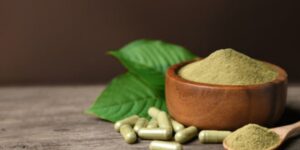
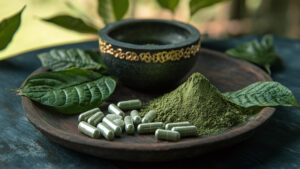
Traditional kratom leaf, whether as crushed leaf powder or brewed tea, contains a relatively modest, naturally occurring concentration of 7-hydroxymitragynine, typically well under 2% of the plant’s total alkaloid content. Mitragynine, not 7-OH, is the dominant compound in raw leaf, and mitragynine is a comparatively weaker partial opioid agonist.
The products that have drawn the most serious concern from the FDA and addiction researchers are concentrated, semi-synthetic 7-OH extracts — tablets, lozenges, and “shot” products engineered to isolate and dramatically boost 7-OH content, sometimes to levels many times higher than what occurs naturally in leaf. Because 7-OH binds more potently to mu-opioid receptors than mitragynine does, these concentrated products behave pharmacologically much closer to a traditional opioid than to the leaf product most people picture when they hear the word “kratom.”
This matters for dependence risk in several concrete ways:
- Faster onset of tolerance. Because concentrated 7-OH delivers a stronger, more opioid-like effect, regular users tend to develop tolerance more quickly than with leaf products.
- More severe withdrawal. Higher receptor-binding potency generally correlates with more intense withdrawal symptoms when the substance is stopped.
- Higher overdose and interaction risk. The FDA has specifically flagged concentrated 7-OH products as carrying elevated risk, including when combined with alcohol, benzodiazepines, or other central nervous system depressants.
- Inconsistent labeling and dosing. Unlike raw leaf, where alkaloid content is naturally variable but relatively bounded, synthetically concentrated 7-OH products can vary widely in actual potency from what the label states, making it difficult for a user to gauge their own risk.
In short: describing something as “kratom” doesn’t tell you much about its actual risk profile. A cup of traditional leaf tea and a concentrated 7-OH tablet are, functionally, closer to two different substances occupying the same legal gray area — and the concentrated version is the one most closely associated with rapid-onset dependence and the emergency room visits regulators have been tracking.
This distinction matters practically, too, if you’re trying to assess your own risk or explain your situation to a doctor. Being able to say specifically whether your use has involved raw leaf powder, traditional capsules, or a concentrated 7-OH tablet or shot product gives a physician far more useful information than simply saying “I use kratom.” It can meaningfully change how they assess withdrawal severity and which treatment approach they recommend.
Kratom and Pregnancy: A Higher-Stakes Risk Category
Kratom and pregnancy is one of the areas where the stakes of opioid-receptor activity become especially serious, and it deserves its own dedicated attention.
Because mitragynine and 7-OH cross the placenta and act on opioid receptors, kratom use during pregnancy carries risks similar to those associated with prescription or illicit opioid use in pregnancy. Of particular concern is Neonatal Opioid Withdrawal Syndrome (NOWS), a condition in which a newborn — exposed to opioid-receptor-active substances in utero — experiences withdrawal symptoms after birth, including tremors, excessive crying, feeding difficulty, and disrupted sleep patterns. Case reports in the medical literature have documented NOWS specifically linked to maternal kratom use.
If you are pregnant, trying to become pregnant, or breastfeeding and currently using kratom in any form, this is not a situation to manage alone or to address by simply stopping abruptly, which can itself carry risks. It’s a conversation to have directly and honestly with an OB-GYN or a physician experienced in perinatal substance use — ideally as soon as possible. Many providers who specialize in perinatal addiction medicine are specifically trained to manage this kind of disclosure without judgment, because the goal is a healthy outcome for both parent and baby, not punishment for past use.
Kratom’s presence in breast milk hasn’t been extensively studied, but given its opioid-receptor activity, most perinatal addiction specialists advise treating it with the same caution applied to other opioid-receptor-active substances during breastfeeding. Again, this is a decision to make with a physician who has full visibility into the frequency and type of kratom use involved, not something to determine independently based on general information like this article.
Treatment Options Through a Doctor
Getting help for kratom dependence works best as a medically guided process rather than something handled alone, and the reason is straightforward: because kratom’s mechanism overlaps so closely with opioids, withdrawal and treatment decisions genuinely benefit from clinical oversight, medication options, and structured support. Here’s what that path typically involves.
Start With a Doctor or Addiction Medicine Specialist
The first step is an honest conversation with a primary care physician or, ideally, a physician certified in addiction medicine through a body like the American Society of Addiction Medicine (ASAM). Being upfront about kratom use — including how much, how often, and whether it includes concentrated 7-OH products — allows a doctor to accurately assess dependence severity and recommend an appropriate level of care.
Medication-Assisted Treatment (MAT)
For moderate to severe kratom dependence, physicians may consider medication-assisted treatment approaches originally developed for opioid use disorder, since kratom acts on the same receptor system. These can include:
- Buprenorphine (available in formulations such as Suboxone, which combines buprenorphine with naloxone) — a partial opioid agonist that can ease withdrawal and cravings under medical supervision.
- Naltrexone (available as Vivitrol in its extended-release injectable form) — an opioid antagonist sometimes used after the acute withdrawal period to help prevent relapse.
These medications are prescription-only and require a doctor’s evaluation; they are not something to source or use without direct medical supervision.
Behavioral and Therapeutic Support
Medication alone rarely addresses the full picture. Evidence-based behavioral approaches commonly used alongside medical treatment include Cognitive Behavioral Therapy (CBT), which helps identify and change the thought patterns and triggers driving use, and motivational interviewing, a counseling approach that helps build a person’s own internal motivation to change. Many addiction treatment programs integrate both.
Levels of Care
Depending on the severity of dependence and any co-occurring health conditions, a doctor may recommend anything from outpatient counseling to a structured outpatient program, an intensive outpatient program (IOP), or, for more severe cases, inpatient or residential treatment. This is a clinical decision best made collaboratively, based on an individual assessment rather than a one-size-fits-all plan.
Ongoing Support and Aftercare
Treatment doesn’t typically end once withdrawal has passed. Many people benefit from continued support through peer-based groups such as SMART Recovery, a secular, evidence-informed mutual-support program, or Narcotics Anonymous (NA), a 12-step fellowship for people recovering from substance use disorders broadly, not just illicit drugs. A doctor or therapist can help determine whether ongoing individual therapy, group support, or a combination best fits an individual’s situation. Because kratom dependence can also coexist with underlying anxiety, depression, or chronic pain that originally drove use, addressing those underlying conditions with a physician is often just as important as addressing the kratom use itself.
Finding a Provider
The SAMHSA National Helpline (1-800-662-HELP), run by the Substance Abuse and Mental Health Services Administration, is a free, confidential, 24/7 referral service that can connect callers with local treatment providers, including those experienced in kratom and opioid-receptor-related dependence. SAMHSA’s online treatment locator serves the same purpose for people who prefer to search independently.
When It’s an Emergency
Certain symptoms warrant immediate emergency attention rather than a scheduled doctor’s visit: difficulty breathing or extremely slowed breathing, loss of consciousness, seizures, blue-tinged lips or skin, or any combination of kratom with alcohol or sedatives that produces extreme drowsiness or unresponsiveness. In any of these situations, call 911 immediately, or contact Poison Control at 1-800-222-1222 for guidance. These situations are genuine medical emergencies, not something to wait out.
The Bottom Line
Kratom occupies a genuinely complicated space — legal in most states, widely available, and not universally dangerous at every dose or format. But the same opioid-receptor mechanism that gives it its effects is exactly what makes dependence a real, documented risk, and that risk climbs sharply with concentrated 7-OH products compared with traditional leaf. Recognizing the signs of kratom addiction early, understanding the specific risks tied to pregnancy, and — above all — involving a doctor rather than trying to navigate withdrawal or treatment alone gives anyone affected by kratom dependence the best realistic path toward getting well.