
The kratom market has expanded dramatically over the past decade, and with that growth has come an almost overwhelming variety of products, powders, capsules, tablets, extracts, gummies, shots, and more. Against this backdrop, one category that draws consistent curiosity is pure leaf kratom: the raw, unprocessed leaf form of Mitragyna speciosa that reflects how this botanical has been used for centuries in Southeast Asia.
But does pure leaf kratom still make sense as a choice in today’s market? How does it compare to the modern product formats that have taken over? And what should a consumer actually look for when evaluating quality, whether that’s raw kratom leaf or its processed equivalents?
This review takes a clear-eyed, informative look at what pure leaf kratom actually is, how it differs from contemporary formats, and what the comparison between unprocessed leaf and processed products like kratom tablets ultimately reveals about quality, consistency, and value.
What Is Pure Leaf Kratom?
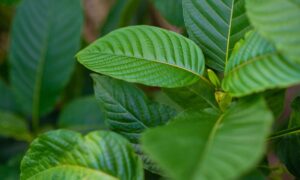
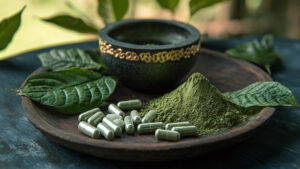
Pure leaf kratom, at its most fundamental, refers to the dried leaves of the Mitragyna speciosa tree, harvested and used in their whole or loosely processed state, without being finely ground into powder, encapsulated, or extracted. Sometimes called raw kratom leaf or whole-leaf kratom, this form of the plant is the closest to what indigenous communities in Southeast Asia have used for generations.
The kratom tree, known locally as Ketum, Thom, or Biak depending on the region, grows in the tropical rainforests of Malaysia, Thailand, Indonesia (particularly Borneo and Sumatra), and other parts of Southeast Asia.
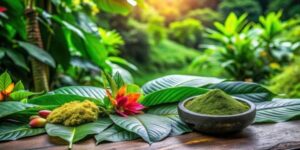
These environments, rich in volcanic soil, jungle ecosystem decay, high humidity, and consistent sun, produce the conditions in which Mitragyna speciosa thrives and develops its characteristic alkaloid profile.
The Appeal of Raw, Unprocessed Leaf
For a segment of kratom users, raw kratom leaf holds a specific kind of appeal, one rooted in authenticity, minimalism, and a preference for consuming botanical products in their least-altered state. This is a perspective worth taking seriously rather than dismissing.
The argument for unprocessed leaf is straightforward: the plant, as it grows and dries naturally, contains its alkaloids in their natural matrix alongside other plant compounds, fiber, chlorophyll, terpenes, and other phytochemicals. Some users believe this full-spectrum experience has a different character from isolated or heavily processed forms.
In Southeast Asian communities where kratom has been part of daily life for centuries, whole-leaf consumption (chewing fresh leaves or brewing loose-leaf tea) remains common. The traditional context carries genuine cultural and historical weight.
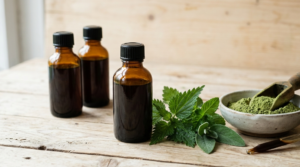
Raw kratom leaf is also sometimes sold in a coarsely chopped form similar to loose-leaf tea, intended for brewing. When sourced from a reputable vendor with appropriate lab testing, this form of pure leaf kratom does offer a way to engage with the botanical in a more traditional manner.
Pure Leaf Kratom: The Brand
Pure Leaf Kratom is a Kratom vendor that has been operating since 2019 out of Lakewood, CA. The brand functions as both a direct seller of its own Kratom line and a marketplace that stocks products from other manufacturers. This dual model gives shoppers a wide variety under one roof.
Product Range
Pure Leaf Kratom’s own line covers standard vein color offerings:
- Green Maeng Da
- Green Malay
- Green Thai
- Red Bali
- Red Borneo
- Red Kali
- Red Maeng Da
- White Borneo
- White Maeng Da
- White Thai
The brand describes its products as all-natural and organic. Beyond its house brand, Pure Leaf stocks enhanced products, extracts, Kratom shots, and capsules from companies such as MIT45, King Kratom, O.P.M.S., and others.
Pricing is competitive. Pure Leaf has been listed as low as $49.99, which puts the brand on the affordable end of the market. Free standard shipping on orders over $30 adds to the value proposition, and a loyalty points program offers returning customers ongoing savings.
The Real Challenges with Raw Kratom Leaf
Understanding what pure leaf kratom is requires being equally honest about what it isn’t: it isn’t a consistently reliable, easily testable, or conveniently storable consumer product for Western markets. Several factors explain why most reputable kratom vendors have moved away from selling raw, whole-leaf kratom as a primary offering.
Alkaloid Distribution Is Uneven
One of the least-discussed but most significant issues with raw kratom leaf is the inconsistency of alkaloid distribution within individual leaves and across leaves from the same harvest.
Alkaloids, the active compounds in kratom, including mitragynine and 7-hydroxymitragynine, are not evenly distributed throughout the lamina (the flat part of the leaf). They concentrate differently depending on the leaf’s position on the tree, its age, and environmental conditions during growth.
Lab Testing Is Substantially Harder
Accurate lab testing is the foundation of consumer safety in the kratom industry. Reputable vendors test their products for alkaloid content, heavy metals, microbial contamination (including Salmonella, E. coli, and mold), and adulterants. This testing is far more straightforward with a homogenous powder than with a variable leaf material.
Shelf Life and Vulnerability to Contamination
Raw, unprocessed kratom leaves are significantly more vulnerable to environmental factors than processed kratom products. Unprotected leaves are susceptible to humidity-driven mold and mildew growth, bacterial contamination, and degradation of alkaloid content from light and temperature exposure.
Where properly stored, kratom powder can maintain quality and potency for up to one to two years, raw leaves have a notably shorter and less predictable shelf life.
Sourcing Challenges in the Western Market
Fresh, high-quality raw kratom leaves are abundant in their native growing regions. In Southeast Asia, where Mitragyna speciosa grows locally, sourcing whole leaves is relatively simple. In the United States and European markets, it’s a different reality.
Fresh leaves don’t survive long-distance shipping without rapid degradation, and the dried, whole-leaf product that eventually reaches consumers may have traveled through multiple hands and storage conditions before arriving.
Modern Processing: What It Preserves and What It Adds
The shift from raw kratom leaf to powdered and encapsulated formats wasn’t driven purely by convenience. It was largely driven by quality, consistency, and safety considerations. When kratom leaves are harvested, promptly dried, and powdered, the alkaloids are captured at peak concentration and distributed evenly throughout the resulting product.
This post-harvest processing, when done correctly, under Good Manufacturing Practice (GMP) standards, produces a more shelf-stable, testable, and consistently potent product than whole-leaf forms.
For consumers, this translates into several concrete advantages: a product with a documented and verified alkaloid profile, a predictable experience from batch to batch, a significantly longer shelf life under proper storage conditions, and a product that has passed lab testing protocols that would be difficult to apply to whole-leaf material.
Comparing Kratom Tablets with Pure Leaf Kratom
The comparison between kratom tablets and pure leaf kratom is one of the more instructive format comparisons in the market, because tablets represent one of the most modern and processed forms of kratom, which makes the contrast with raw leaf particularly clear.
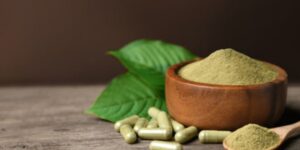
Kratom tablets are produced by pressing finely ground kratom powder, sometimes with a small amount of binding agent, into a compact pill form under high pressure. This binding agent is necessary because kratom powder alone doesn’t hold its shape without it. Reputable tablet products use minimal, food-grade binders; less reputable ones may use synthetic additives.
When comparing kratom tablets with pure leaf kratom, several dimensions stand out:
- Consistency: Kratom tablets contain a precisely measured, pre-specified amount of powdered kratom, typically 300 mg per tablet, made from evenly milled leaf material. Pure leaf kratom, by contrast, offers no comparable precision in serving measurement.
- Portability and discretion: Tablets are compact, odorless, and virtually indistinguishable from any other supplement. Whole-leaf kratom is bulkier, more odorous, and requires preparation.
- Onset timing: Kratom tablets dissolve relatively quickly in the digestive system, providing an onset experience faster than capsules but comparable to powder consumed directly.
- Taste: Kratom’s naturally earthy, bitter flavor is present in tablets (though milder than in loose powder) and is especially pronounced in raw leaf tea. Tablets can be swallowed quickly, minimizing exposure to taste; whole-leaf tea requires either tolerance for the flavor or significant masking with other ingredients.
- Alkaloid integrity: Both tablets and raw leaf kratom contain the plant’s natural alkaloid compounds, though the tablet’s source material (powdered, homogenized leaf) provides a more even alkaloid distribution.
- Lab testability and safety certification: As discussed, powder-based products, such as tablets, are substantially easier to rigorously test for quality, purity, and safety.
- Cost: Raw loose-leaf kratom can be available at a lower per-gram price point, though this varies considerably by vendor and sourcing. Tablets, with their additional processing steps and encapsulation materials, typically carry a premium.
What to Look for in Any Kratom Product: Quality Markers
Whether a consumer is evaluating pure leaf kratom or processed alternatives, the quality markers that indicate a trustworthy product remain consistent. This framework applies whether you’re buying raw kratom leaf from a specialty vendor or comparing kratom tablets with pure leaf kratom on a retailer’s site.
- Third-party lab testing: Any reputable kratom product, regardless of format, should come with a certificate of analysis (COA) from an independent laboratory, documenting alkaloid content, heavy metal levels, and microbial testing results, including Salmonella, E. coli, yeast, and mold counts.
- GMP compliance: Vendors who operate under cGMP (current Good Manufacturing Practices) standards maintain the manufacturing, processing, packaging, and storage conditions necessary to produce consistently safe, labeled-as-claimed products.
- American Kratom Association (AKA): The AKA maintains a Good Manufacturing Practices Program that sets baseline standards for kratom vendors across production, testing, labeling, and marketing.
- Transparent sourcing: Vendors who are transparent about their supply chains, identifying their farming partners, region of origin, and post-harvest processing methods, are generally more accountable for quality throughout the process.
- Clear, compliant labeling: Proper labeling should include the strain type, lot number, net weight, serving-size guidance, a list of ingredients (relevant for processed formats), and the vendor’s contact information.
- Proper storage and packaging: Quality kratom products arrive in resealable, light-resistant packaging that protects against humidity, oxidation, and contamination. Raw kratom leaf products require particular scrutiny here, given the format’s higher vulnerability to environmental degradation.
Final Thoughts
Pure leaf kratom occupies a genuinely interesting space in the market, one that speaks to authenticity, tradition, and the appeal of minimally processed botanical products. For users with access to reliably sourced, lab-tested whole-leaf kratom and the patience for proper preparation, the raw leaf experience has a character and context that no powder or capsule fully replicates.
But in the practical reality of the Western kratom market, the case for raw, unprocessed leaf faces serious headwinds: inconsistent alkaloid distribution, difficult quality verification, shorter shelf life, vulnerability to contamination, and the challenges of measuring consistent servings. These aren’t minor inconveniences; they’re meaningful barriers to the safe, consistent product experience that responsible kratom use requires.
Modern processed formats, powders, capsules, and tablets in particular, were developed in large part to address exactly these limitations. When produced by vendors committed to transparent sourcing, rigorous third-party testing, and GMP compliance, they offer a more verifiable, consistent, and shelf-stable experience than raw leaf kratom can realistically provide at scale.