In the world of botanical extracts, Maeng Da and Thai kratom are two of the most recognized names. Both originate from the same plant species—Mitragyna speciosa, but they differ significantly in their history, cultivation, processing, and the experiences associated with them. As interest in kratom varieties continues to grow, many people find themselves comparing these two popular strains and asking a very practical question: What’s the difference between Maeng Da vs Thai kratom?
In this blog, we’ll explain what Maeng Da kratom is, the different types of Maeng Da available, what Thai kratom is, how Thai kratom is commonly described in terms of experience, and how these two varieties compare across several dimensions.
What Is Maeng Da Kratom?
Maeng Da kratom is one of the most talked-about kratom strains in the global kratom community. The name “Maeng Da” doesn’t refer to a specific region like “Thai” does. Instead, it refers to a particular grade or classification that historically emphasized potency and quality.
Origins and Meaning
The phrase Maeng Da comes from Thai language roots—“Maeng” loosely translates to “pimp” or “boss,” and “Da” means “excellent” or “high quality.” This was a colloquial way to denote top-tier kratom leaf long before modern branding and commercial labeling took over. Traditional cultivators in Southeast Asia developed Maeng Da through selective breeding techniques designed to enhance certain characteristics in the leaf.
Development Through Selective Cultivation
Rather than emerging naturally in one specific region, Maeng Da kratom was developed by growers who took stock plants from various areas and selectively propagated seeds with desirable traits. Through generations of controlled breeding, they created a line of plants that consistently produce dark, resinous leaves with robust compound profiles.
Modern Interpretation
Today, Maeng Da is understood as a premium or enhanced kratom variety. Different vendors and producers may cultivate their own versions of Maeng Da, such as Thai Maeng Da, Borneo Maeng Da, or Other Regional Maeng Da, but the core idea remains consistent: it’s a strain selected and processed with particular attention to quality and potency.
Types of Maeng Da Kratom
While Maeng Da is a single classification, it comes in several variations, each distinguished by its color and, in some cases, by the region it was originally sourced from. These variations reflect differences in leaf vein color and processing methods.
Green Maeng Da
Green Maeng Da is often characterized by a balanced profile. It typically falls between its red and white counterparts in terms of sensory descriptors and subjective user experience. Many people describe green Maeng Da as smooth with moderate intensity.
Red Maeng Da
Red Maeng Da is made from mature leaves with red veins. Traditionally, leaves that develop red veins are harvested later in their growth cycle. Red Maeng Da is often perceived as full-bodied with a deeper, richer aroma. Among kratom enthusiasts, red vein varieties (including red Maeng Da) are often highlighted for their steady, mellow sensory experience.
White Maeng Da
White Maeng Da is sourced from plants with white veins or lighter vein coloration. White vein leaves historically develop pronounced characteristics that are perceived as more energizing or stimulating. White Maeng Da may reveal a sharper onset in terms of sensory engagement and a bright, vibrant profile.
Regional Maeng Da Varieties
Some vendors offer region-specific Maeng Da strains, for example, Thai Maeng Da or Borneo Maeng Da. When you see a regional prefix, it typically refers to the origin of the seed stock or the growing conditions associated with that locale. These regional variations can import subtle differences based on soil composition, climate, and farming practices, but they are all under the broader Maeng Da classification.
Enhanced or Super Maeng Da
In consumer markets, you’ll sometimes encounter terms like “Enhanced Maeng Da” or “Super Maeng Da.” These labels usually indicate that the raw leaf has been processed in a way that concentrates some of its botanical compounds, such as through extended drying, careful sieving, or even mixing in high-grade material. While such enhancements aim to elevate consistency or sensory perception, the underlying plant material remains kratom leaf.
Understanding the types of Maeng Da helps you recognize that “Maeng Da” is less a single strain and more a category defined by cultivation choices, vein color, and processing methods.
What Is Thai Kratom?
Thai kratom refers more specifically to kratom that originates from Thailand, the Southeast Asian country where kratom use has deep cultural roots.
Historical Context
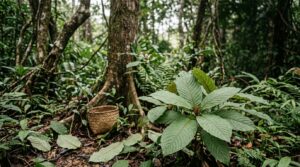
Mitragyna speciosa is indigenous to parts of Southeast Asia, including Thailand. For generations, people in southern Thailand used kratom leaves in a traditional context. They would chew fresh leaves or brew the leaves into teas as part of daily routines or social gatherings.
In Thailand, kratom has long played a role in rural agricultural communities, where it was cultivated alongside other crops. Over time, Thai kratom, meaning kratom harvested and processed in Thailand, became known for certain characteristic qualities tied to climate, soil composition, and regional cultivation practices.
Regional Influence on Leaf Characteristics
Because the terroir (a term often used in plant cultivation to represent soil, climate, and landscape) of Thailand differs from places like Borneo or Indonesia, Thai kratom developed its own nuanced botanical profile. The tropical conditions, rainfall patterns, and shade levels all contribute to how the leaf matures and what compounds it accumulates over time.
Modern Marketplace Definition
In today’s market, “Thai kratom” typically refers to kratom sourced from Thailand or produced from seed stock specifically selected for their genetic lineage linked to Thai plants. Like Maeng Da, Thai kratom can come in multiple vein colors, red, green, and white, each with distinct characteristics. But the defining feature remains its geographical and genetic origin.
Thai Kratom Effect: What People Commonly Describe
Much of the discussion around different kratom strains revolves around experience descriptors, that is, how people characterize the sensations or general impressions when consuming different varieties. While individual experiences vary, and we don’t make direct health claims, there are some consistent patterns in how users describe Thai kratom.
General Sensory Characteristics
People who have tried Thai kratom often describe its effect profile as feeling grounded, steady, and balanced. Many users highlight attributes like:
- A clear and engaging sensory impression
- A well-rounded, even sensation over time
- A stable and sustained transition from onset to dissipation
These descriptions don’t point to health outcomes, but rather to the subjective quality people notice during and after consumption.
Vein Color and Perceptual Nuances
Just as with Maeng Da, vein color is associated with subtle shifts in experience:
- Red Thai kratom is often described as rich and mellow, with a deeper, sustained vibe.
- Green Thai kratom is often noted for a balanced feel, somewhere between red and white varieties.
- White Thai kratom can feel more vibrant and lively to users.
These differences are tied to leaf maturity and regional cultivation factors, which shape the plant’s chemistry and sensory nuances.
Onset and Duration Descriptors
Many people note that Thai kratom varieties tend to develop steadily over time, leading to a smooth transition from initial placement to the full experience. This contrasts with some other regional varieties that can feel more front-loaded or immediate in their sensory engagement.
Across vein colors, Thai kratom is commonly associated with a steady, measured impression that evolves gradually rather than peaking abruptly.
Comparing Maeng Da and Thai Kratom: Origins and Development
Now that we’ve defined Maeng Da and Thai kratom separately, let’s compare them directly in several key areas, beginning with origin and development.
Genetic Lineage and Cultivation
- Maeng Da: Rather than being a single origin, Maeng Da is a selectively bred classification. It was historically developed through careful propagation of high-quality leaf plants, with a focus on producing robust botanical profiles. You’ll find Maeng Da originating from different regional seed lines: Thai Maeng Da, Borneo Maeng Da, and so on.
- Thai Kratom: This refers more directly to kratom harvested from Thai plantations or seed lines with roots in Thailand. Its identity is tied to geography, climate, and the specific growing conditions of Thai soil.
Standardization and Expectation
- Maeng Da: Because it was developed for consistency and potency, Maeng Da is often marketed as a premium or enhanced option. Users expect a uniform profile across batches.
- Thai Kratom: Thai kratom can vary more from harvest to harvest, depending on seasonal conditions, soil nutrition, and other evolving factors. While it remains high quality, its variability is tied to the natural rhythms of cultivation.
Comparing Maeng Da and Thai Kratom: Sensory and Experience Descriptors
Although Maeng Da and Thai kratom share many botanical roots, user communities often distinguish them based on subjective experience descriptors.
Perception of Engagement Over Time
- Maeng Da: Many people describe Maeng Da as impactful and robust, with a clear and discernible onset that carries steadily. Because of its breeding history, it often feels consistent from serving to serving.
- Thai Kratom: Thai kratom is frequently described as smooth and steady, with a balanced curve between onset, peak, and decline. Some users feel that Thai kratom delivers a well-rounded experience that integrates seamlessly into ongoing activity.
Vein Color Influence Across Both Types
Vein colors matter in both categories:
- Red vein: Generally noted for deeper and rounder sensation patterns.
- Green vein: Often described as balanced and versatile.
- White vein: Perceived as brighter or more perceptible in its initial effect.
Comparing Maeng Da and Thai Kratom: Strength and Consistency
Another area of comparison between Maeng Da vs Thai kratom focuses on perceived strength and consistency.
Perceptions of Potency
Maeng Da, due to its historical breeding and enhancement, is often described as feeling stronger or more pronounced in its sensory impression compared to some regional varieties. This is part of why it became a popular classification to begin with: it set a user expectation for a lively experience.
Thai kratom, rooted in its geographical identity, often feels more moderate and balanced to users. This isn’t to say one is objectively better than the other—just that they tend to carry different profiles in practice.
Batch-to-Batch Consistency
Because Maeng Da was developed with consistency in mind, users often report a high degree of predictability across batches. Thai kratom can be consistent too, but its variability, tied to seasonal and regional factors, may introduce slight differences between harvests.
Choosing Between Maeng Da and Thai Kratom: Factors to Consider
When comparing Maeng Da vs Thai kratom, personal preference plays a big role. There’s no universally “right” choice, but several areas can help guide your decision.
Experience Preference
Do you prefer a robust, engaging profile that feels sharp and lively? Or do you lean toward a smooth, steady impression that unfolds over time? These subjective preferences often guide whether Maeng Da or Thai kratom feels more fitting.
Consistency and Predictability
If uniformity across batches is a priority, Maeng Da’s historical reputation for consistency might appeal more. If you enjoy subtle variations that reflect natural harvest differences, Thai kratom may resonate.
Vein Color Nuances
Regardless of strain, the influence of vein color remains significant. Red, green, and white varieties each have perceived nuances, so selecting the vein color that aligns with your preference can be more meaningful than choosing between Maeng Da or Thai kratom alone.
Regional Identity vs Selective Breeding
If geographical origin matters to you, Thai kratom’s regional identity may hold special interest. If selective breeding and enhanced botanical profiles are your focus, Maeng Da’s pedigree may be more appealing.
Storage and Preservation: Keeping Kratom Fresh
Whether you choose Maeng Da, Thai kratom, or both, proper storage helps maintain quality over time.
Cool, Dry, and Light-Free
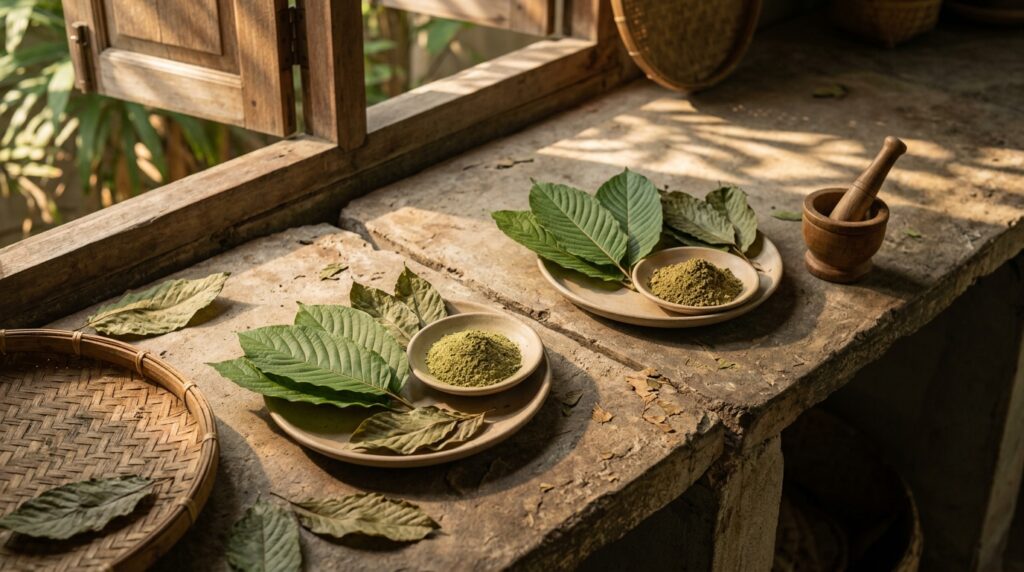
Kratom leaf powder or capsules are best kept in a cool, dry place away from direct sunlight. Heat and moisture can degrade botanical material over time.
Airtight Containers
Using airtight containers or resealable pouches helps reduce exposure to air, preserving aroma and sensory qualities.
Avoid Frequent Exposure
Repeatedly opening containers exposes the kratom to ambient air and humidity. Consider dividing larger amounts into smaller, daily-use containers to minimize exposure.
Proper storage doesn’t change what kratom is, but it helps preserve the attributes you choose it for.
How to Use Kratom: General Guidelines
Using kratom, whether Maeng Da or Thai, involves a few straightforward steps that prioritize ease and consistency.
Measure Thoughtfully
Using a reliable scale or measured spoon helps ensure serving size consistency. Exact amounts vary by personal preference and experience.
Mix Carefully
Kratom powder can be mixed into a beverage or taken in capsules. Taking it with a small amount of food or drink may make the experience smoother.
Stay Attuned to Timing
Individuals often note differences based on timing relative to meals or activity. Some prefer to take kratom on an empty stomach, while others pair it with light snacks. Personal patterns help guide what feels most comfortable.
Pacing and Observation
Because sensory impressions vary, try spacing out use and observing how the kratom resonates with your routine. Adjust as you develop familiarity with your chosen strain and vein color.
These practical points don’t reflect health outcomes but focus on ease of use and personal rhythm.
Final Thoughts
Comparing Maeng Da vs Thai kratom highlights both shared heritage and distinct identities. They come from the same species, yet their cultivation, processing, and user perception differ in meaningful ways.
Maeng Da represents a classification deeply rooted in selective cultivation and consistency, often perceived as robust and engaging. Thai kratom carries a regional identity shaped by the specific conditions of Thailand’s tropical terrain, often described as steady, balanced, and rooted in natural variability.
Neither is objectively superior; they simply offer different sensory profiles. Your preference may depend on how you want the experience to unfold over time, how consistent you like your servings to feel, and whether regional origin or cultivar pedigree matters most to you.
By understanding the differences between these two popular varieties, including vein color nuances, cultivation history, sensory descriptors, and practical usage guidance, you can make thoughtful choices aligned with your preferences. Whether you lean toward Maeng Da, Thai kratom, or enjoy exploring both, the key is knowing what each strain brings to the table and how that aligns with your individual taste and routine.